A Focus on the End

By | Blog

Almost immediately following Cassie’s Stage IV metastatic breast cancer diagnosis, she started thinking about her death. Not so much “is there a heaven and hell” but more logistics – like will she be cremated? Buried? What will the memorial service be like? What music will we have? How do we reconcile our different religions? What will her obituary say?  

It turns out that Cassie has been focused on her own funeral since junior high. She still has a sketched-out version of her funeral program that she did in 7th or 8th grade. (So, to her friends from Cotter Junior High, she is officially rescinding your pallbearer invitations. Sorry.) And, Cassie’s mom told her that many years ago she had selected scripture readings for her funeral that she had written out and given to her for safekeeping. So to Kay, we should probably get those back. 

To Dan though, this all seemed way too soon and way too sad to think about. He knew we were going to have to talk about it at some point, and plan it all out eventually, but to him that meant later. In a few years. Certainly not so soon after the diagnosis.

Conversely, Cassie realized that her fixation on the details of death, while upsetting to Dan and probably unnerving to friends, actually gave her a much needed sense of control. So much about the illness was (and still is) beyond our control, but this wasn’t. And Cassie is an organizer and a planner and planning for her own death felt aligned with her natural tendencies and strengths. 

This was one of the first times where we saw things really differently. 

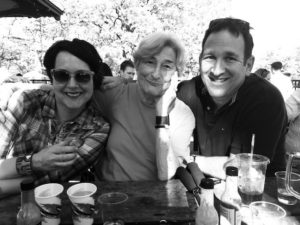
So knowing how important this was to Cassie, we came up with a compromise, which like many other things in our lives right now was developed with a heavy dose of dark humor. Here’s the deal we made with each other. We would start talking about the end of life issues but we would always have the conversations at a brewery to take some of the edge off. It’s not a perfect solution by any means but it makes the hard conversations just a little easier.

As we started talking about end of life plans other differences emerged. Dan expressed his desire to have Cassie buried. Cassie felt strongly about being cremated. So, we decided she’d be cremated and then buried. We toured a couple of cemeteries. Cassie is Catholic and Dan is Jewish so it is important for us to find a cemetery that is non-denominational and welcoming for both of us. We also want something near St Paul and easy to get to. 

(Here’s a tip – when you’re just trying to get a feel of a cemetery, don’t make an appointment. Just drive or walk around. Check out the grounds and views. See how it feels. For the first place we visited we made the mistake of making an appointment. The cemetery man was akin to the worst car salesman you’ve ever met. “What can I do to get you to buy a cemetery plot today? I can talk to my manager and get you 20% off.”  Seriously it could have been a f***ing SNL sketch. We spent the entire time kicking each other under the table and suppressing giggles.) 

We talked about funeral music, where we might have the service, and whether or not Dan could do a version of a Shivah at our home. We talked about our religious differences. Cassie had preliminary discussions with her parents about their thoughts (not an easy conversation but none of this is and they were awesome, by the way) and we even talked to two potential officiants. 

Then Cassie slowed her roll. As she became more settled into her illness and into how to live with metastatic breast cancer she feels less of the need to focus on end of life planning. But then something strange happened — we reversed roles after Dan’s mom died. Seeing how suddenly Dan’s mom’s health deteriorated and how she went from being fine to not being able to answer even the simplest of questions Dan became terrified that the same might happen to Cassie at some point. Not likely but possible. So now Dan feels some urgency to dive into more of the death details.

All of this has made us realize how we have to be open to each other’s timelines and evolving priorities. Nothing about this can ever really be written in stone. There is no right way or time to discuss any of this. We both just have to commit to communicating about what’s important to us and when — even if that changes often. So now, having recognized all that, we are proceeding — not at a crazy pace but we are letting ourselves go there and think and talk about the end when either of us needs to. And we still try to do it at a brewery.
About Metastatic Breast Cancer . . . Some things we want you to know

By | Blog

When Cassie was diagnosed there was so much we didn’t know about metastatic breast cancer. Since then, we have often found ourselves facing a common set of questions and/or misconceptions so we thought it might be helpful to share some basic facts.

What is metastatic breast cancer?

MBC, also known as Stage IV, is breast cancer that has spread to other parts of the body–most commonly to the bones, liver, brain and lungs.

But if it is in your lungs, isn’t it lung cancer?

No. It is breast cancer in the lungs. It is not considered lung cancer.

How did it go from the breast to your lungs?

Most likely, it traveled through the bloodstream to create tumors in the lungs.

When will Cassie be finished with treatment?

Unfortunately never. While treatable, MBC cannot be cured. Scans, blood tests, and treatments will be ongoing. The goal of the treatment is to stabilize the disease — prevent the cancer from growing and spreading to other parts of the body and to prolong life. Once a treatment stops working (i.e., the cancer grows or spreads) the oncologist will switch Cassie to another type of treatment. This will go on until all viable treatment options have been exhausted.

What is the prognosis?

Some people with MBC live for a long time. We’ve read about women living for ten years! New treatments are being developed all the time. One of the drugs Cassie is taking is relatively new and the impact on survival rates is not yet known but appears positive. However, current general stats say the five year survival rate for stage IV breast cancer is 22%; median survival is three years.

But Cassie looks healthy. How is this possible?

Cassie’s current treatment doesn’t have visible side effects. But, please know that just because she looks normal doesn’t mean she feels well.

If Cassie fights really hard and stays strong, she’ll beat this, right? She is a survivor.

There is no cure for MBC. No matter how hard she “fights” or how positive her attitude this disease will kill her. Just the fact of the matter. We’re trying to stay away from referring to this illness as a battle or a fight as that language suggests that if one fights hard enough the cancer can be defeated. It just doesn’t work like that.

What else should you know? We found this video (https://youtu.be/QDQ0FjP7J-c) done by an MBC patient (who has since died) to be very helpful in wrapping our heads around the disease and some of the common perceptions and misconceptions that arise. Check it out but be warned it’s pretty emotional.

Grief Meets Grief

By | Blog

One of the hardest and most surreal parts of Cassie’s diagnosis has been dealing with what we have been calling “living grief.” It’s the grief we feel right now for the life we lost, for the dreams we fear we have to give up and for the sadness and emptiness that we carry around. It’s there every single day and at this point, doesn’t appear to be lessening at all. It’s heavy.

On Sunday, May 12 (Mother’s Day) our living grief met new grief when my mom died. She had been suffering from a serious blood condition for some time but her death was sudden and unexpected. In fact, the day before she entered the hospital, we were together celebrating her granddaughter Mimi’s second birthday. Mom was in rare form and good spirits. She was making plans for the future, arguing with me about driving and seemed so vibrant and full of life. Then, just seven days later, she was gone.

My two brothers and I were at her side for those final days. We got to say goodbye and we celebrated her life with family and friends at a beautiful service in her hometown of Chicago. We shared stories. We looked at pictures. We ate heartily at two Shivas (which is basically a Jewish wake with bagels, cured meats and smoked fish) and we rejoiced in what a wonderful mother,  mother-in-law and grandmother she had been. Then all the “doing” stopped and the grief hit like a freight train.

I am still reeling of course and keep expecting her to call or wanting to call her.  She moved to Minnesota almost two years ago and lived five minutes from me and Cassie. We saw her often and talked to her daily. We shopped and ate together. We shared books. We bemoaned Trump. We laughed a lot. She was a huge presence in our lives which now feel too quiet and empty.

It’s so sad. My chest hurts. I can’t sleep. I feel slow —  like I am walking through water. I remember much of this from when my dad died, even more suddenly in 2015, but what I am experiencing now somehow seems both familiar and different and harder all at the same time.  

I think part of what makes it so hard right now in particular, is that this is our first crisis since Cassie’s diagnosis and we are both facing this new crisis already depleted. Before, when one of us was going through something bad, that person would lean harder on the other. One of us could serve as a rock in our relationship. This time we were both already in crisis when mom died. The grief I feel around the loss of my mom and the grief I feel around Cassie’s illness is also grief that Cassie is experiencing. How do we balance the need to support each other while taking care of ourselves and experiencing our own grief? Cassie’s illness impacts both of us. The death of my mom impacts both of us. Grief has met grief and it feels almost unbearable.

So what do you do when this happens? When your living grief runs head-first into new grief. I don’t know other then I guess you try to make room for it. That’s what we have already been attempting to do around Cassie’s illness — create room for our new reality even though we don’t want to.

Grief is so tangible and so heavy. You can’t ignore it but it doesn’t just fit neatly into your life. We have to slow down, name it and let other things go so we can handle the new weight that grief adds. Now with even more weight, I think we need to go even slower. Let even more things go. Create more room in our life for the sadness, loneliness and emptiness. This probably isn’t the last time that grief will meet grief for us, so we need to try and muddle through, practice extreme patience with each other and learn what we can about ourselves and our grief processes. We need to let others help us and love us. We need to grab lightness and joy when and where we can. Most of all though, I think we just need to accept that it’s going to be really heavy and hard for a while and that’s just what happens when grief meets grief.

A New Job

By | Blog

Over the course of my career, I’ve written many job descriptions. Actually, I kind of always hated writing job descriptions. How do you capture the essence of a position and how success will be measured? But, every role should have a job description – it’s a best practice.

Right after my diagnosis, Dan went out with his close friend and mentor Kari. She told him over breakfast that he “has a new job – being a caregiver.” That got us both thinking about our roles right now. So, at the time of huge change in our lives – a terminal cancer diagnosis and both of us having different relationships with work – it seemed like we need new job descriptions to guide us.

My “new job” includes some tasks that are exciting and others that are daunting. Some can be easily be addressed in the short term. And, others are more aspirational and have a longer time horizon.  I know I’ll be better at some of my “tasks” than others. But, it’s my hope that this job description will serve to guide me in focusing my energies in this new phase of life.

Here is my new job description . . . .

Be grateful and graceful in all interactions: late-stage cancer is scary for everyone. Be kind and generous with those who put their feet in their mouths. Their words come from a place of concern and love

Look for beauty and purpose in the dying process: create opportunities for reflection

Share love freely: Tell people how you feel about them. Write some letters, send some emails, give some hugs

Comfort, support, guide and prepare my husband, parents, and sisters: be open with feelings and thoughts on end of life, talk and see each other regularly

Share my story and my learnings with others diagnosed with terminal illness: start a blog, write a book

Help educate my community about MBC: no sugar coating or skirting the hard topics

Be my own best caregiver: exercise regularly, rest when tired, take meds, keep doctor appointments, inform care team of new symptoms or side effects

Leave my nieces and nephews with memories of me and fun times together: take pictures, schedule outings, plan a big trip, send postcards and letters

Accept help: let people love and support me by bringing meals, walking the dog, cleaning the  house, etc.

Look at each day as a new adventure: use our “buckets” as a guide, plan each day – even if the plan is to do very little

Stay curious and keep engaged with the world: read, do crossword puzzles, play cards, travel to new places

Put a premium on having fun: do things that make me happy, try new things, express my wants and desires

Plan my funeral, find a cemetery and get my things in order

Overwhelm my husband with love, gratitude, kindness, and good memories

Be gentle on myself: this shit is hard

Gratitude Revisited

By | Blog

In her last post, Cassie mentioned our nightly tradition of writing in our gratitude journals. What she didn’t know was that I stopped journaling the day she was diagnosed.

I wasn’t feeling grateful. I was pissed. Angry at the world. Not understanding why something like this would happen to such a good person. Why had the cancer come back? Why didn’t the doctors catch all of it 16 years ago when it first appeared? Why couldn’t they cure it now? Why, why, why? Fuck. Fuck. Fuck.  That’s how I felt. Not grateful, rageful.

Then, in my first appointment following Cassie’s diagnosis, my therapist Craig said: “The most important thing right now is gratitude.” I told him right away that I didn’t see it. I mean yes, I was grateful we had health insurance and flexibility around work and for our supportive community, but that was it. I was too angry and scared to be deeply grateful.

He looked at me and said. “You’re really hurting. You’re in a ton of pain. And you’re really terrified, right?” Yes to all three, I affirmed. Well he went on to say: “Maybe the reason it hurts so much, and is so painful, is because those things are in direct proportion to how much you love Cassie and that’s what you should be grateful for.”

I looked at him and took it in. Started to speak then stopped and thought some more. He was right. Cassie and I are blessed with a great love and that is why this hurts so much and is so scary — because the love of my life is sick and I hate everything about that. But I am grateful for our love, now more than ever.

I told Craig he had earned his therapist gold star that day. That night I shared all this with Cassie and we both embraced the idea that pain and gratitude might now be intertwined in ways we didn’t previously understand. Then I took out my gratitude journal and started writing again. The thing I was most grateful for that day, and every day since: “Time left with Cassie.”

Forming Habits That Connect Us

By | Blog

I can see how a cancer diagnosis can tear a couple apart. The fear, the insecurity and the stress could easily become insurmountable. One of the things we’ve found helpful is to maintain old habits and develop new ones that keep us connected. In fact, one of our new life “buckets” (see our last post for more on those) that we try to practice daily is connection.

For the last three years, Dan has been writing in a gratitude journal every night. I joined him in the nightly ritual about two years ago. Now, each night before bed we take time to write, independently, in our gratitude journals. Just two or three or ten things from the day for which we are grateful. Neither of us goes to sleep before asking the other “did you write in your book?” This shared practice of gratitude keeps us grounded in the positive. (Although, on my dark days I can struggle. And, I admit to a few less than grateful entries.)

A new habit we developed is taking a little time each morning to randomly choose and then read together an Affirminator card. Our dear friend, Beth, gave a deck of these cards to Cassie a while back (you can find them on Amazon). The cards have fun, affirming messages that connect us and get us in the right frame of mind to start our days.

These simple habits have been helping us maintain a closeness and shared perspective.

Here is our Affirminator from today –

“No Need To Do:  I am exactly where I need to be, exactly when I need to be. There’s nothing more I need to do. I mean, yes, there will always be laundry and taxes – but in terms of my life’s path, I don’t need to do anything because I am already here. I take a deep breath, relax, and trust (and then do laundry).”


Buckets – Not a Bucket List

By | Blog

In the weeks following Cassie’s diagnosis we got lots of advice. We weren’t in a position to hear most of it as we were just trying to come to grips with the situation in which we suddenly found ourselves. Brief aside: if you wind up knowing other people who receive a similar late-stage cancer diagnosis hold onto your advice for a while. It’s not that its unwelcome, it’s that you can’t process much of anything those first few weeks.

One thing that did break through though was a breakfast conversation that Dan had with his friend Paul who shared an insight from another friend who had an advanced cancer. That friend advised “don’t make a bucket list because if you do then you are living to die.” This was super interesting to us because we had, in fact, just started a bucket list of things we wanted to do in the time we had left together. But instead we paused and thought about it some more.

On the one hand we totally understood why so many people make a bucket list — it makes all the sense in the world. At the same time, the advice resonated because what happens when you have checked off everything on the list? What then? We found that neither of us wanted to face that question so instead we asked ourselves some other questions. If we don’t want to live to die then what does it look like to live fully right now? How do we spend our time? What matters most? What’s our purpose?

So, one day with all these questions in mind, we sat down at our dining room table with a big piece of paper and together made a list of all of the things that “feed our souls.” The things that make us happy and the things that now seem most important. It was a long list (which was nice) so since both of us are strategists at heart we decided to “bucket” it into categories.

We came up with 13 buckets (something symbolic there since Cassie was diagnosed on Friday the 13th). They included things like time with family and friends, reading, movies and games, food, cooking and wine, exploring new things, and travel. They are not all “buckets of fun” because we included other things like house projects and end of life planning. Some are more important to Cassie, some to Dan, but all of them reflect what feels most nurturing and essential to us as a couple.

And we’ve started to use the buckets. To plan our weeks. To make decisions about what we want to do. To help us prioritize and say no to things. We look at them all the time. We talk about them. Refer to them by name. We fill them up with specific activities. Three of them (connection, health and reflection) we try — with limited success — to do every day. We’ve refined them. Added some and lost others. The point isn’t to have a list but rather to have a better sense of what matters most to each of us and to both of us.

Even before Cassie was diagnosed, we were trying to be more intentional about using our time. That probably made our bucket exercise easier because we weren’t starting from scratch. Our challenge before, though, was that we frequently found ourselves so busy that we lost sight of what mattered most. We don’t have that luxury anymore because every day really matters. That’s why we love our buckets and don’t have a bucket list.

Everything is Not Ok

By | Blog

We walked into the oncologist’s office knowing that Cassie had cancer again. Our care coordinator had told us that the appointment, scheduled for a few days after the biopsy, would be cancelled if cancer wasn’t found. The cancellation call never came as much as we had jumped up every time the phone rang. So we knew.  But we still hoped that things would be ok.

That had long been our mantra whenever one of us was facing a tough day or week or a particular life crisis. The one of us who was struggling would turn to the other and say: “Everything is going to be ok, right?” And it usually was. Even when Cassie was first diagnosed with early stage breast cancer 16 years ago. We would work or fight through the situation together. Support each other. Remain optimistic. Remind each other that things were going to turn out ok.

Then, on Friday, July 13 2018, the doctor told us that Cassie has metastatic breast cancer. We had different understandings of what that meant but Dr. Leach clarified it succinctly. Metastatic means that it has spread. It’s automatically “Stage IV” (Dan naively or hopefully asked if there was another stage after that but the doctor just shook his head). It’s “treatable but not curable.” And finally, we probably shouldn’t plan on more than five or six years though he naturally caveated the shit out of that prognosis.

There we were. In shock. Looking at each other dumbstruck. Cassie had to go have more tests. Dan had to call our families. And then as we drove home Cassie said it: “Honey, things are not going to be ok.”

She’s right of course. Unless things change there is no good outcome for women with MBC. So what we are now trying to figure out is how do you live fully and full of love when you know things aren’t ok? That our time together is going to end way sooner than we want, that our days, weeks and years will likely be filled with sadness, grief and trauma, and all of that is on top of Cassie feeling exhausted and crappy. How do we live like this? How do we stay true to our values? Can we find joy in the sadness? What stays the same? What changes? All big questions and all emerged over the weeks that followed the diagnosis.

That day though we were consumed with only one question — how do we share this news and with whom? Cassie is super private. Dan not so much. Dan is on social media. Cassie not so much. Dan wanted to share with the world. Cassie with as few as people as possible. We resolved this by sending an email to our family and close friends and in subsequent weeks we shared a little more widely. Word got out. People now know — though we each still bump into friends whom, to our great chagrin, we forgot to tell. And, if you are one of them and reading this we are really sorry.

What became clear right away is that we had pretty different views on communicating about the cancer and its impact on our lives and that we had to reconcile those differences. Now on the one hand this is not a unique situation. All couples have to bridge disagreements and we’ve been doing that for twenty-plus years. On the other hand, a metastatic cancer diagnosis changes everything including how you communicate, solve problems and navigate differences. We think about the cancer differently. We think about life (and death) differently. We process Cassie being sick differently. And what we’ve found is that there are not a lot of resources to help us navigate all of this as a couple. There is a lot of support available for Cassie as a cancer patient and a lot of guidance for Dan as a caregiver but not a lot of help on how to do this together.

So we decided to start writing. To share our experiences. To get out of our heads. To help us process all this as a couple. We totally get that within the context of a horrible diagnosis we are fortunate to have time, space, resources and flexibility to reflect on all of this, talk it through, and try to find meaning where we can. We are grateful for that and we hope that by sharing some of what we are going through we can pay it forward.

Maybe that’s how we make today OK.